|
| |
Home>Product>Nickel |
| |
| |
| Nickel |
- Nickel
- Lateritic Ore Processing
- Specification
Nickel
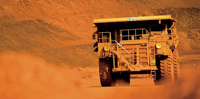
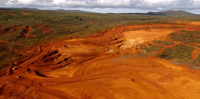
Primary nickel is produced from two very different ores, lateritic and sulfidic. Lateritic ores are normally found in tropical climates where weathering, with time, extracts and deposits the ore in layers at varying depths below the surface. Lateritic ores are excavated using large earth-moving equipment and are screened to remove boulders. Sulfidic ores, often found in conjunction with copper-bearing ores, are mined from underground. Following is a description of the processing steps used for the two types of ores |
|
Lateritic ore Processing
Lateritic ores have a high per centage of free and combined moisture, which must be removed. Drying removes free moisture; chemically bound water is removed by a reduction furnace, which also reduces the nickel oxide. Lateritic ores have no significant fuel value, and an electric furnace is needed to obtain the high temperatures required to accommodate the high magnesia content of the ore. Some laterite smelters add sulfur to the furnace to produce a matte for processing. Most laterite nickel processers run the furnaces so as to reduce the iron content sufficiently to produce ferronickel products. Hydrometallurgical processes based on ammonia or sulfuric acid leach are also used. Ammonia leach is usually applied to the ore after the reduction roast step.
Sulfidic Ore Processing
Flash smelting is the most common process in modern technology, but electric smelting is used for more complex raw materials when increased flexibility is needed. Both processes use dried concentrates. Electric smelting requires a roasting step before smelting to reduce sulfur content and volatiles. Older nickel-smelting processes, such as blast or reverberatory furnaces, are no longer acceptable because of low energy efficiencies and environmental concerns. In flash smelting, dry sulfide ore containing less than 1% moisture is fed to the furnace along with preheated air, oxygen-enriched air (30–40% oxygen), or pure oxygen. Iron and sulfur are oxidized. The heat that results from exothermic reactions is adequate to smelt concentrate, producing a liquid matte (up to 45% nickel) and a fluid slag. Furnace matte still contains iron and sulfur, and these are oxidized in the converting step to sulfur dioxide and iron oxide by injecting air or oxygen into the molten bath. Oxides form a slag, which is skimmed off. Slags are processed in an electric furnace prior to discard to recover nickel. Process gases are cooled, and particulates are then removed by gas-cleaning devices.
Nickel Refining
Various processes are used to refine nickel matte. Fluid bed roasting and chlorine-hydrogen reduction produce high-grade nickel oxides (more than 95% nickel). Vapor processes such as the carbonyl process can be used to produce high-purity nickel pellets. In this process, copper and precious metals remain as a pyrophoric residue that requires separate treatment. Use of electrical cells equipped with inert cathodes is the most common technology for nickel refining. Electrowinning, in which nickel is removed from solution in cells equipped with inert anodes, is the more common refining process. |
| Nickel |
|
|
| Ni |
1.50 - 1.70% |
|
| Co |
0.03% |
|
| Fe |
15 – 17% |
|
| SiO2 |
40 – 45% |
|
| MgO |
16 -19% |
|
| CaO |
1.10 – 1.40% |
|
| MC |
30.00% |
|
|
| |
| Ni |
1.800 - 2.200 % |
|
| Co |
0.03% |
|
| Fe |
15 – 17% |
|
| SiO2 |
40 – 45% |
|
| MgO |
16 -19% |
|
| CaO |
1.10 – 1.40% |
|
| MC |
30.00% |
|
|
|
|
|
|
|
| |
|
|
| |
|
|